Introducing STEM Through Everyday Kitchen Science
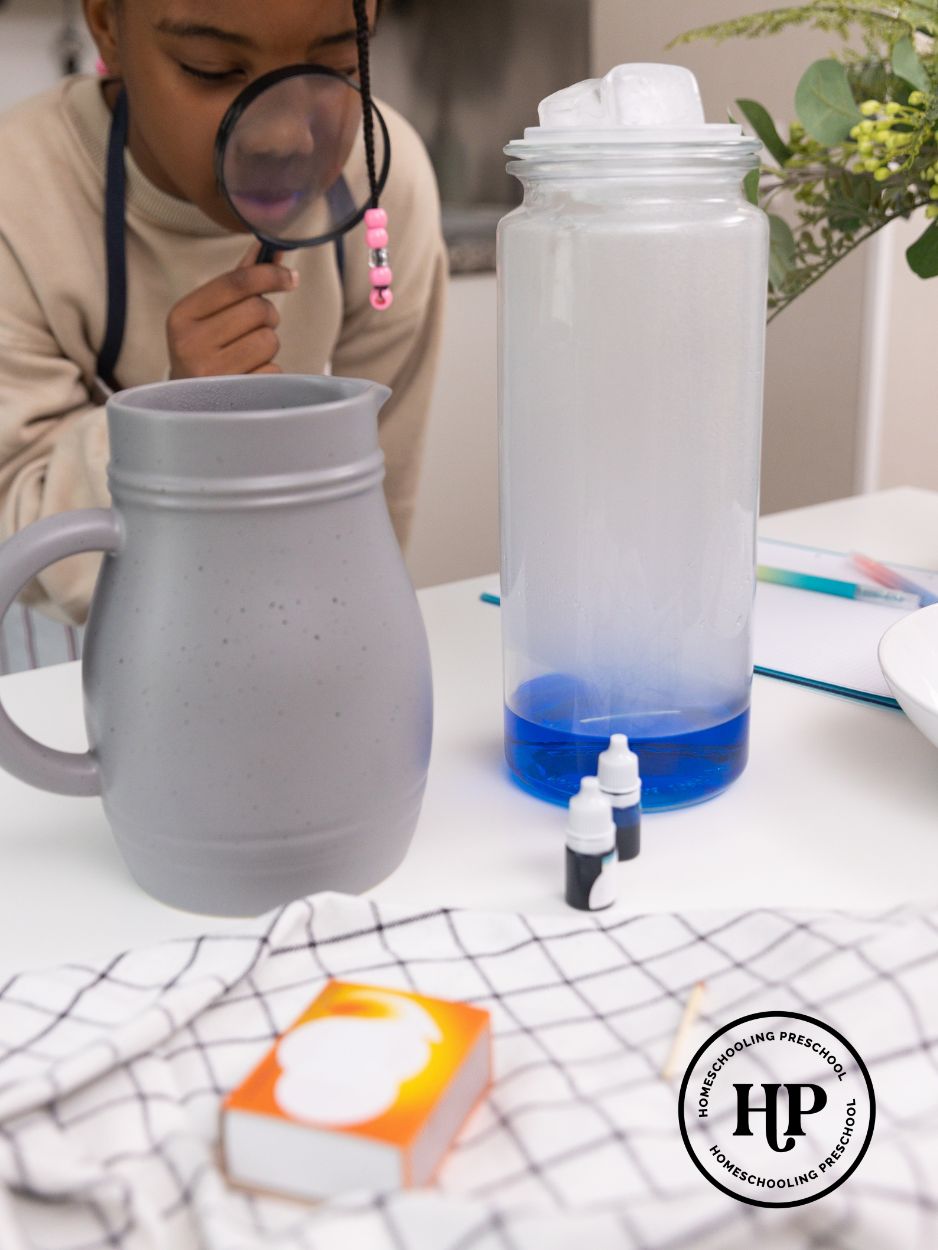
Bring science concepts to life with everyday kitchen science preschool experiments. Hands-on learning right in your own kitchen!
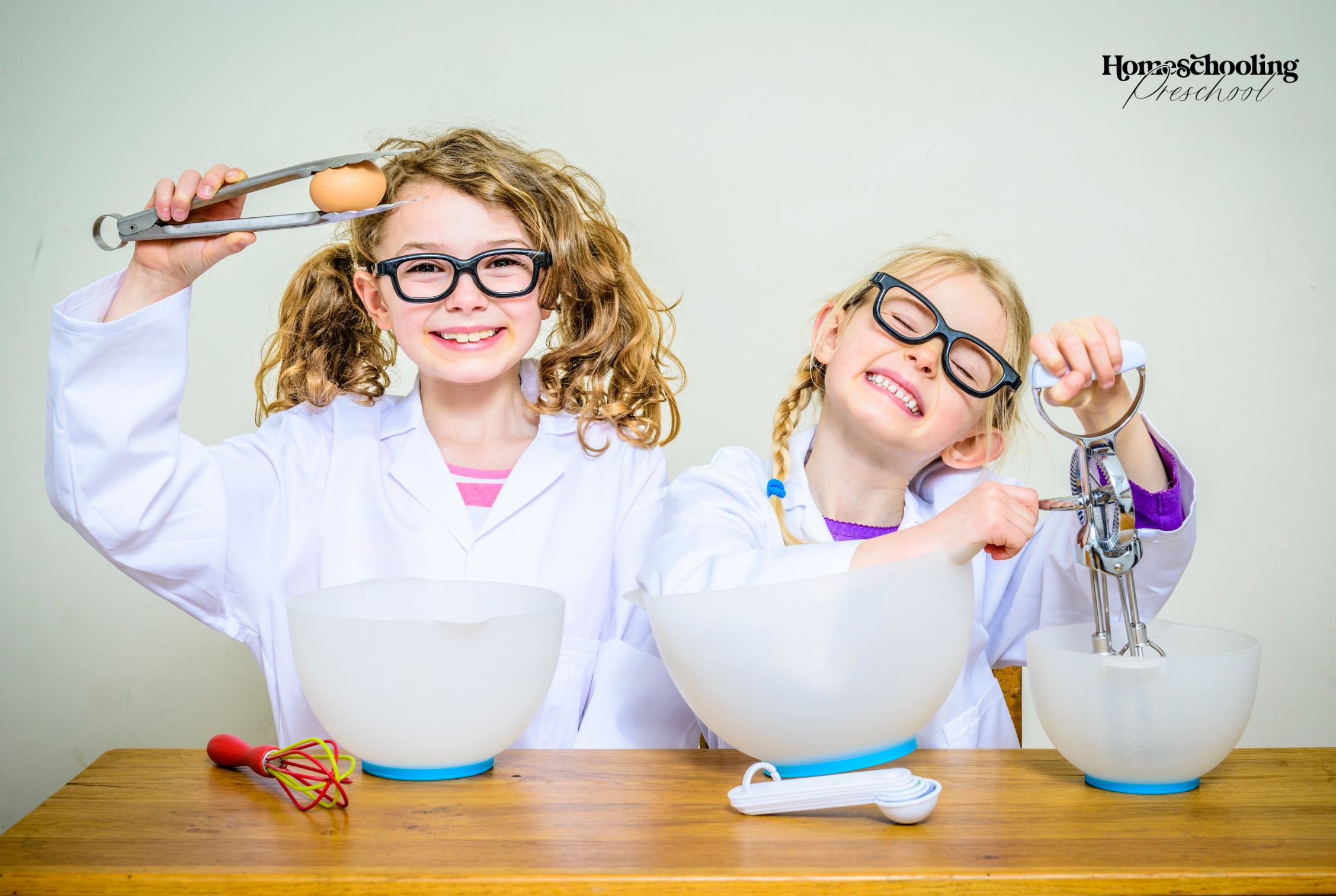
What Are Everyday Kitchen Science Preschool Experiments?
Simple Experiments
No 15-step instructions with these experiments! Littles are able to complete the kitchen science preschool experiments with guidance, and it doesn’t take an hour of hands-on steps to complete (yay)!
Everyday Ingredients
It’s an awful feeling when you’re ready to do a STEM preschool cooking experiment, only to find out that it requires a unique ingredient you forgot to add to your grocery list (or worse yet, the local store doesn’t stock it!).
No need to worry about that with everyday kitchen science preschool experiments! All of these have simple ingredients you probably already have on hand.
Scientific Topics Taught
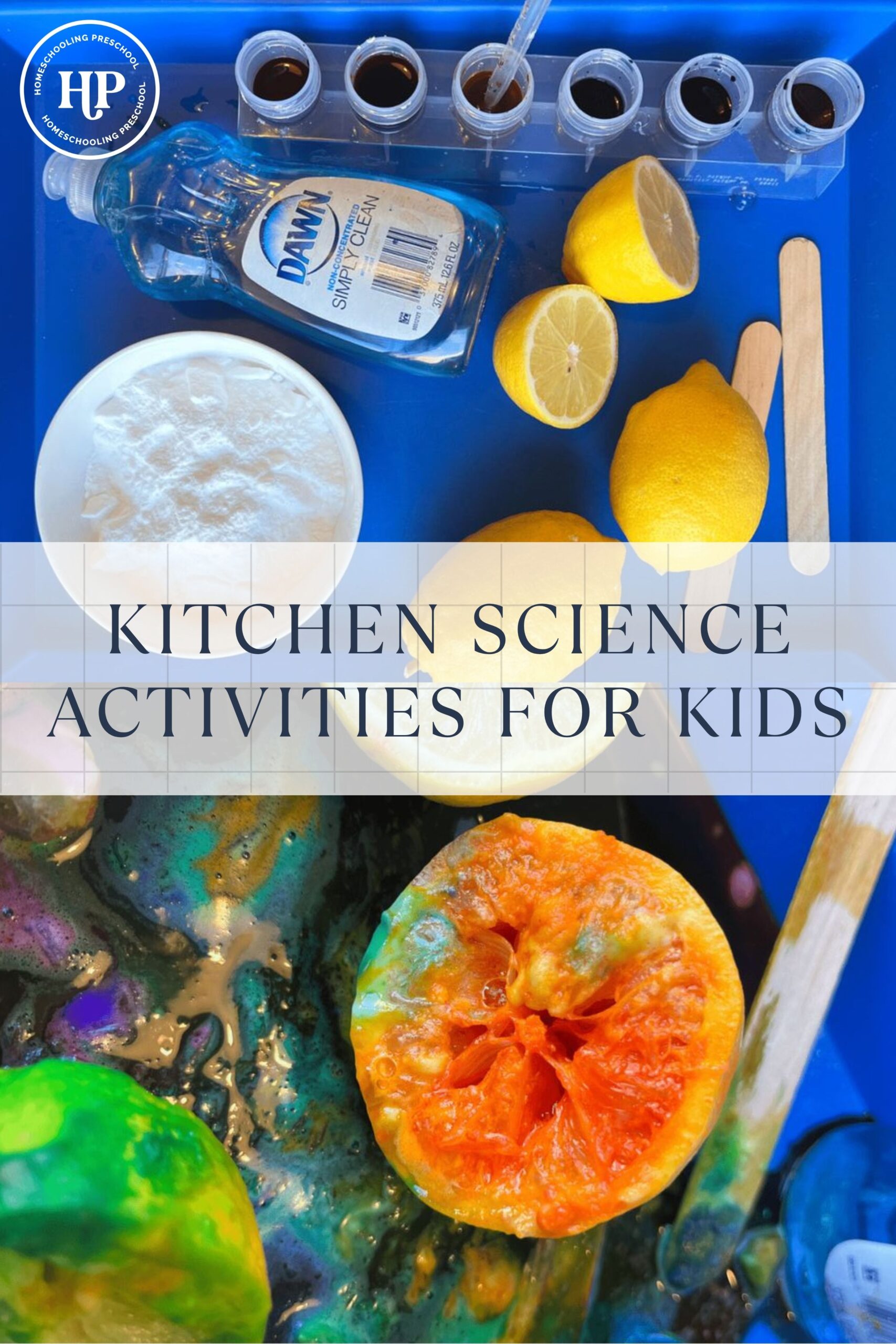
Integrate scientific topics, such as density and states of matter, into kitchen experiments.
Plenty of Fun and Sensory Play
Kids will have a chance to do the mixing and pouring in these experiments. Their senses will be awoken while they smash, stir, and play!
This article may contain affiliate links to products that may help you when homeschooling preschool.
Everyday Kitchen Science Preschool Experiments to Try
Making Butter
With a jar and some heavy whipping cream (and lots of shaking), your little one can make their own butter!
See how the whipping cream changes from a liquid to a solid simply by shaking the jar.
For detailed instructions, click here.
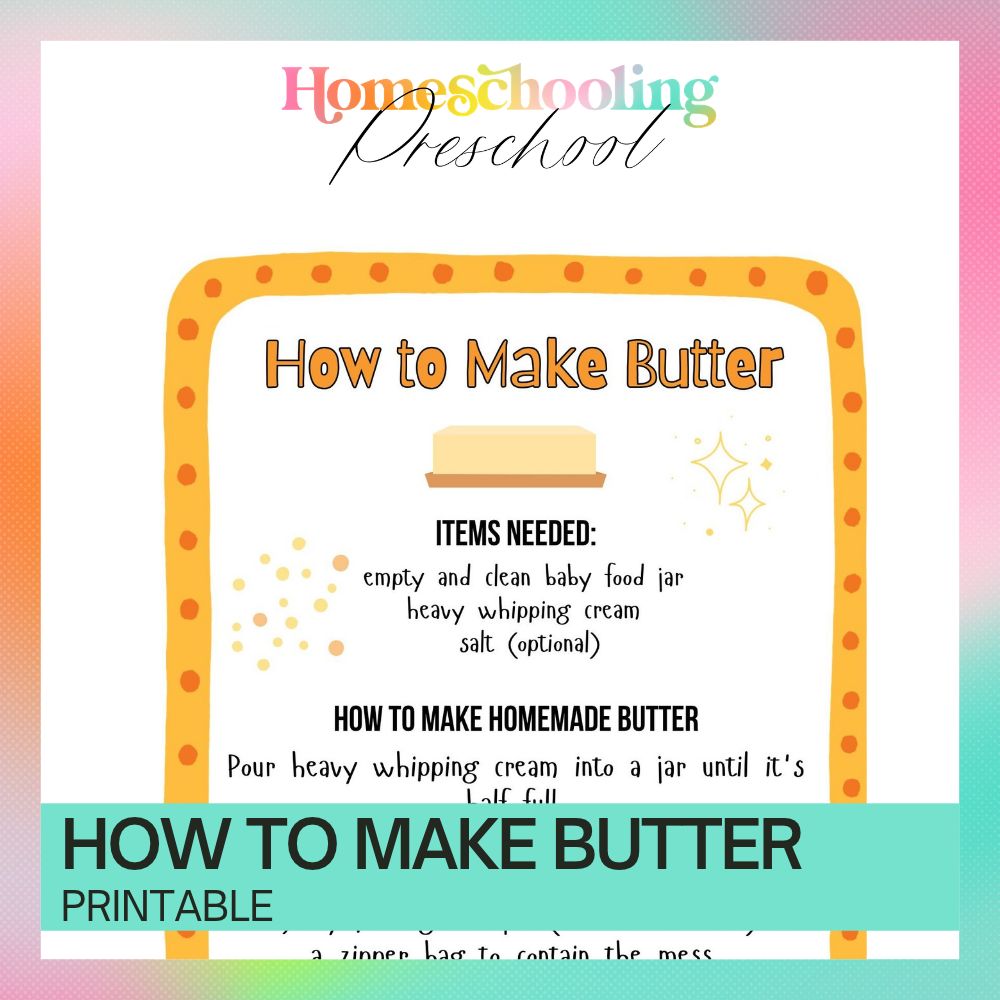
Grab the How to Make Butter Free Printable in the Freebies Library!
Not a member yet? It’s quick, easy, and, best of all, FREE to join! =)
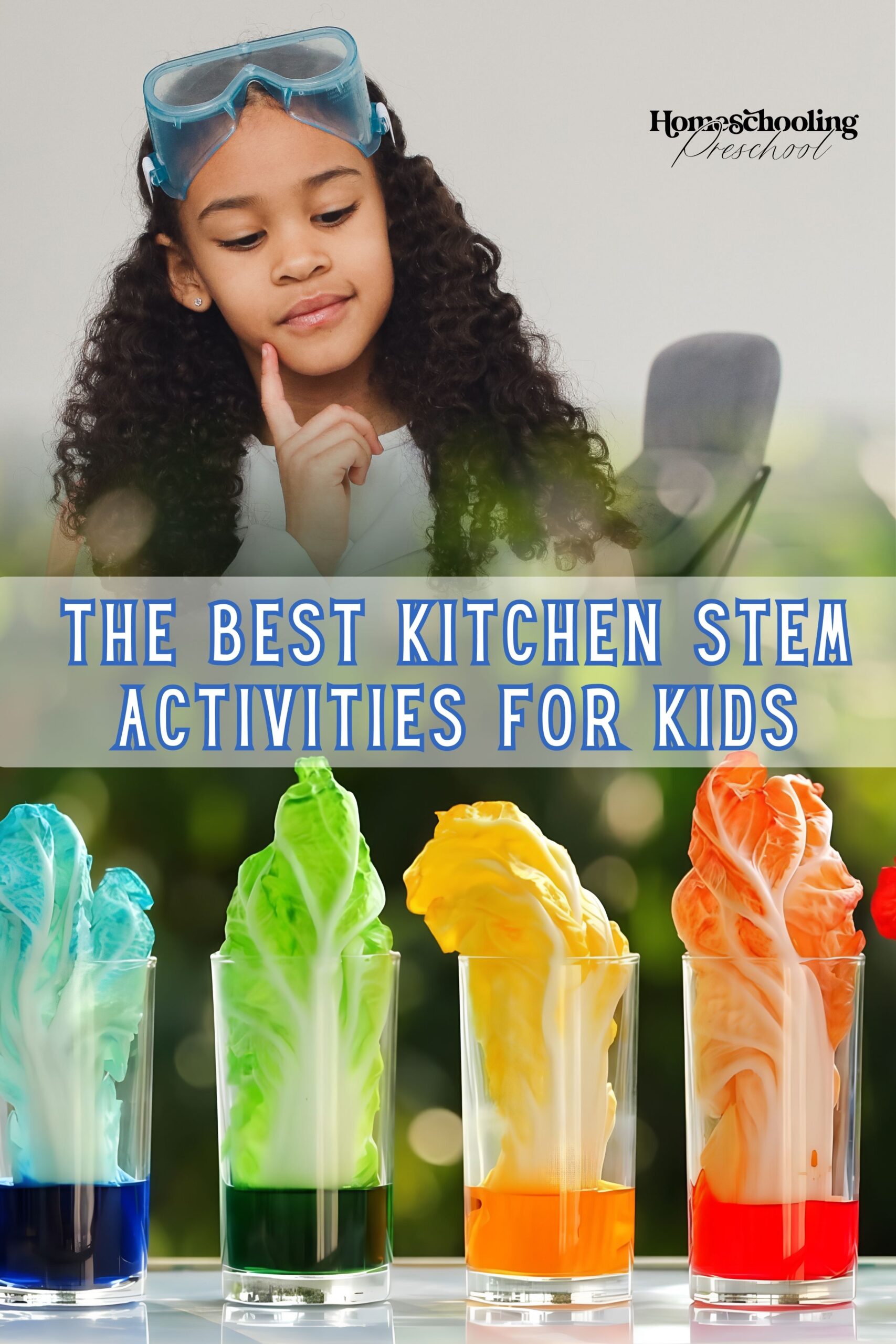
Rainbow Crawlers
Show the capillary effect (how plants get water and nutrients up from the roots to the rest of the plant and flower) with this simple kitchen science preschool experiment.
Fill two glasses, each half-filled with water. Add different colored food coloring to each glass.
Take a paper towel and fold it a few times lengthwise so it resembles a long snake. Set one end in the first glass and the other end in the second glass. Watch as the paper towel changes color as it sucks up the water.
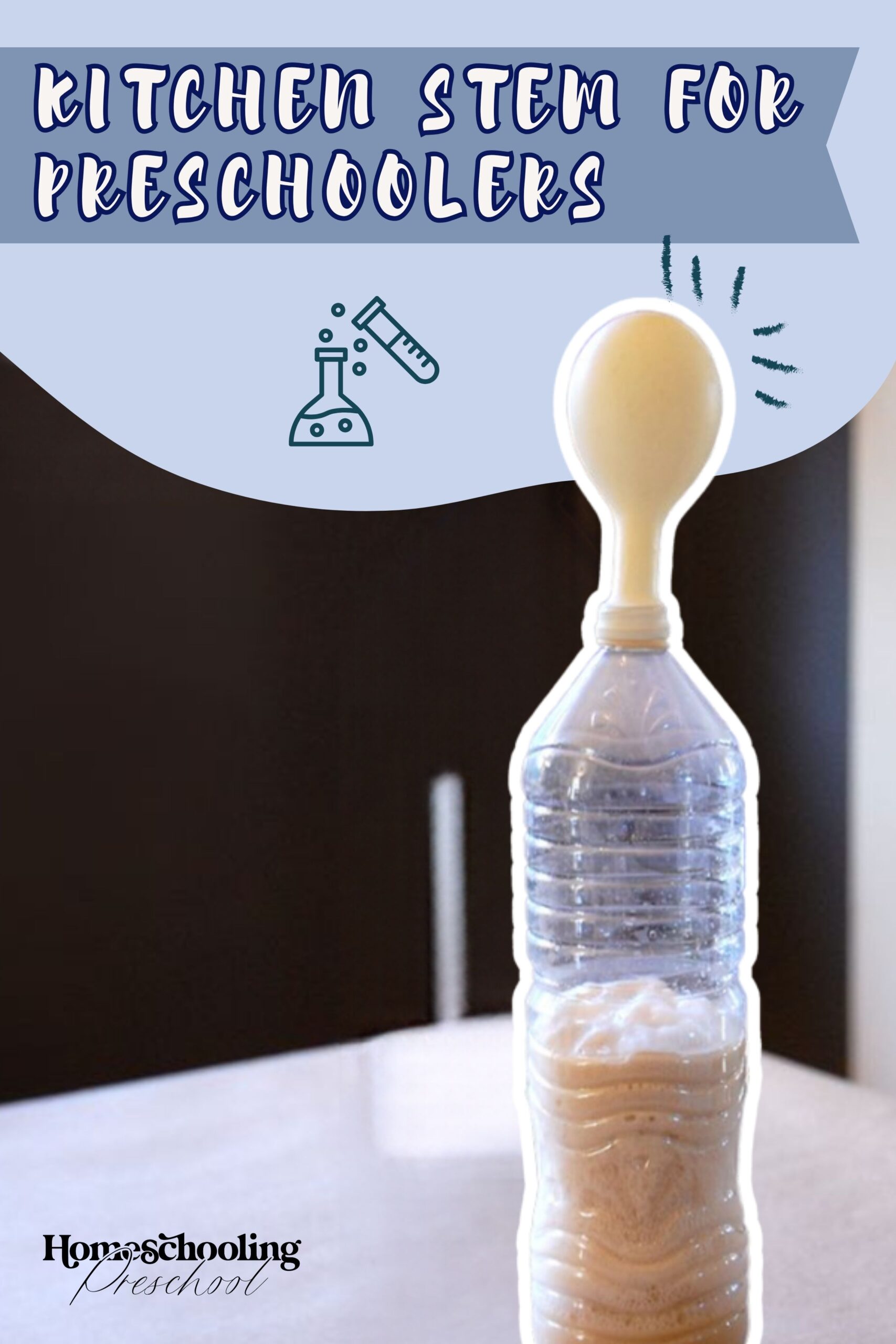
Dancing Raisins
Buoyancy is the force that pushes up on an object when it is dropped in water. This force counteracts the weight of the item, making it feel lighter or even float.
Watch buoyancy in action by doing a dancing raisin kitchen science preschool experiment.
Pour some carbonated water into a clear glass. Add raisins and watch them dance!
Littles may notice the bubbles (carbon dioxide) attach to the raisins.
For more detailed instructions, click here.
Pepper and Soap
Demonstrate surface tension (water molecules liking to stick together) with a dish, pepper, dish soap, and a toothpick.
Add some water to a shallow bowl or plate. Sprinkle on some black pepper. Dip the tip of the toothpick into the soap. Gently touch the soap to the top of the water and watch as the pepper ‘runs’ away.
The soap lowers the surface tension, which means the water molecules aren’t holding together as tightly. When the water moves away from the soap, the pepper moves with it.
Rubber Egg
Osmosis is when water moves through a semipermeable object to make the water concentration inside the object the same as it is outside (around) the object.
To demonstrate how this works, gather a glass, an egg, a metal spoon, vinegar, and food coloring.
Add some vinegar and food coloring to the glass and stir. Gently lower the egg into the vinegar. Place the metal spoon on top of the egg to keep it submerged.
Wait about 24 hours (there should be foam on the top of the vinegar) and check the egg. The shell should be dissolved, and the egg will be colored.
Note: the egg isn’t cooked, so it can still break and make a gooey mess.
Sink or Float
Teach density and buoyancy with a game of “Sink or Float.” Using the sink or a basin, add water and let your little one put toys in. As they do, have them guess if the items will sink or float.
Invisible Ink
When some items react with oxygen, how the item looks may change. This is called oxidation.
Show your little ones the concept of oxidation by creating invisible ink.
Dip a Q-tip into lemon juice and write or draw on a piece of paper. Let the paper dry. Heat the paper with an iron or by holding it up to a light bulb. As the paper heats, the ink should reappear.
Try a heatless version by following these steps.
Fruit Displacement
Volume and displacement can be taught by using fruit and a clear glass of water.
Fill the glass up halfway. Have your little one add in a piece of fruit and see how the water level changes.
If it were a small piece, the water level might not appear to have changed. But trying an orange or an apple may cause the water to move quite a bit.
This is an excellent kitchen science preschool experiment that demonstrates how the fruit pushes the water out of the way.
You can use a rubber band to mark the starting water level by moving it to the top of the water level. Then your little one will be able to compare where the level was and where it is now.
Move Items With a Balloon
Static electricity can be a fun concept to teach your preschooler. Have them rub a balloon on their hair. Let them look in the mirror to see all of their hair sticking out.
Then try to stick the balloon to the wall. Why does it stick?! Static electricity!
Amaze them further by trying to move small bits of cereal or crumbs with a statically charged balloon.
Thick Liquid Race
Teach about viscosity with a thick liquid race. Viscosity is a measure of how slowly liquids move (how resistant they are to movement).
Think ketchup, honey, and molasses when doing this fun kitchen science preschool experiment.
Using a plate or tray, place a small amount of various liquids along the top of the plate or tray. Have your little one lift the plate or tray so it is at an incline and watch as the liquids race down.
The slowest ones are most resistant to movement, so it has a high viscosity. Something like water (or any other runny liquid) has a low viscosity (a low resistance to movement —in other words, it likes to move).
STEM Preschool Cooking Experiments
Wrangle up some everyday items to create wonderful everyday kitchen science preschool experiments. Your little one will love taking their learning into the kitchen with you!


